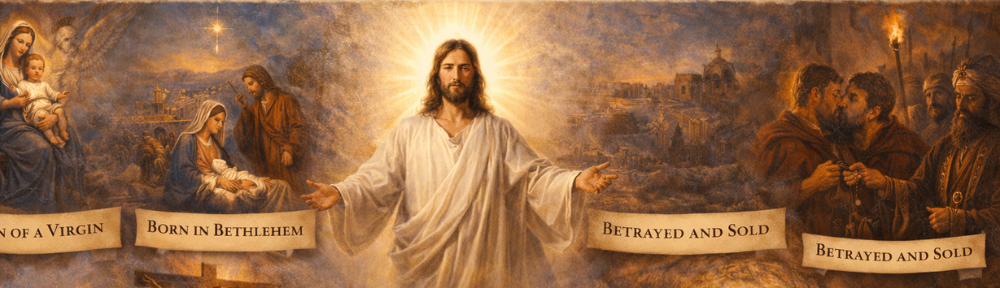
Throughout the Old Testament, God promised the coming of a Messiah — a Savior who would redeem His people, establish His kingdom, and bring eternal salvation. These promises, written centuries before Christ’s earthly ministry, find their ultimate fulfillment in Jesus of Nazareth. The precision and depth of these prophetic fulfillments are not only remarkable but foundational to understanding the unity and divine inspiration of the Scriptures.
1. The Messiah Would Be Born of a Virgin

One of the earliest and most striking prophecies of the Messiah’s miraculous birth is found in Isaiah 7:14:
“Therefore the Lord himself will give you a sign: Behold, the virgin shall conceive and bear a son, and shall call his name Immanuel.”
“Immanuel” means “God with us,” signifying the divine nature of the Messiah. This prophecy finds its fulfillment in the New Testament when Mary, a virgin, gave birth to Jesus (Matthew 1:22-23):
“All this took place to fulfill what the Lord had said through the prophet: ‘The virgin will conceive and give birth to a son, and they will call him Immanuel.’”
Here, the miracle of the virgin birth underscores the divine origin of Jesus, distinguishing Him from any ordinary human king.
2. The Messiah Would Be Born in Bethlehem
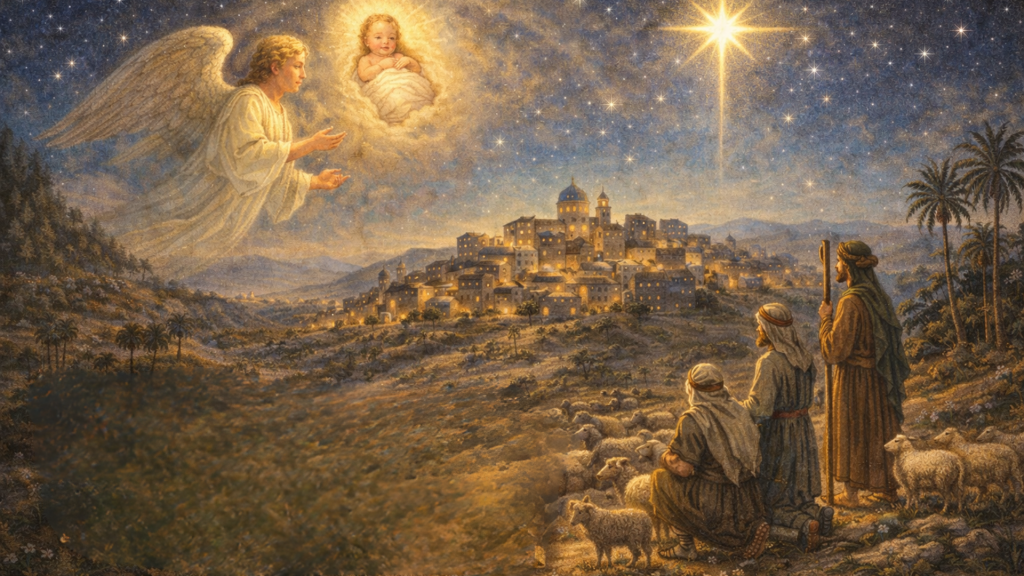
The birthplace of the Messiah was foretold centuries before the birth of Christ. Micah 5:2 proclaims:
“But you, Bethlehem Ephrathah, though you are small among the clans of Judah, out of you will come for me one who will be ruler over Israel, whose origins are from of old, from ancient times.”
Jesus’ birth in Bethlehem fulfills this prophecy exactly, as recorded in Matthew 2:1:
“After Jesus was born in Bethlehem in Judea, during the time of King Herod, Magi from the east came to Jerusalem.”
The specificity of this prophecy — pointing to a small, seemingly insignificant town — highlights the divine orchestration behind Christ’s birth and mission.
3. The Messiah Would Suffer and Die for Our Sins
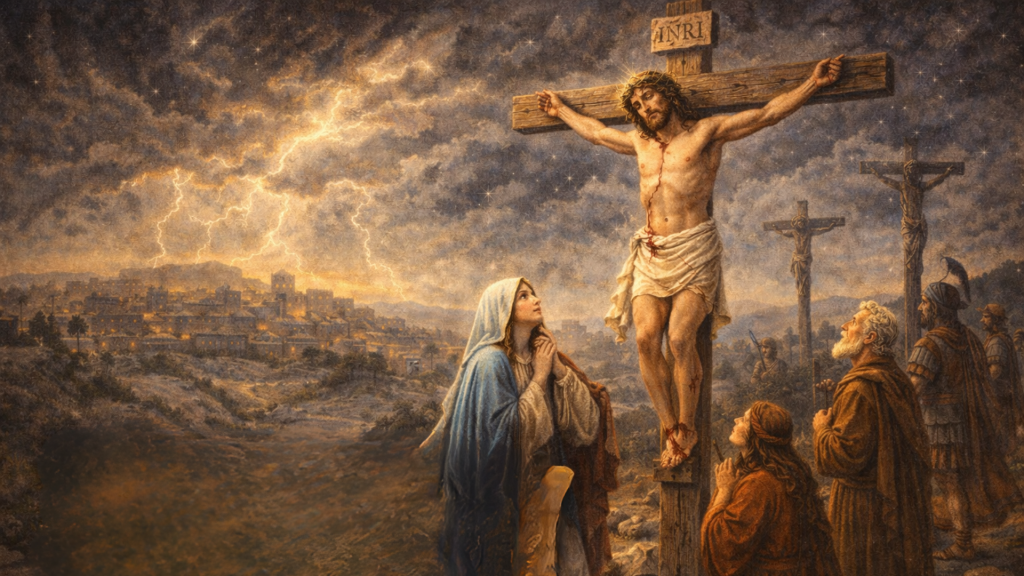
Isaiah’s prophetic imagery of the suffering servant (Isaiah 53) reveals the redemptive purpose of the Messiah. He would bear the sins of many and endure suffering for humanity’s salvation:
“He was pierced for our transgressions, he was crushed for our iniquities; the punishment that brought us peace was on him, and by his wounds we are healed” (Isaiah 53:5).
The New Testament confirms that Jesus fulfilled this prophecy through His crucifixion (John 19:16-18, 34):
“One of the soldiers pierced Jesus’ side with a spear, bringing a sudden flow of blood and water.”
This suffering was not incidental; it was the deliberate fulfillment of God’s redemptive plan, demonstrating the Messiah’s role as the sacrificial Lamb.
4. The Messiah Would Enter Jerusalem Humble and Lowly
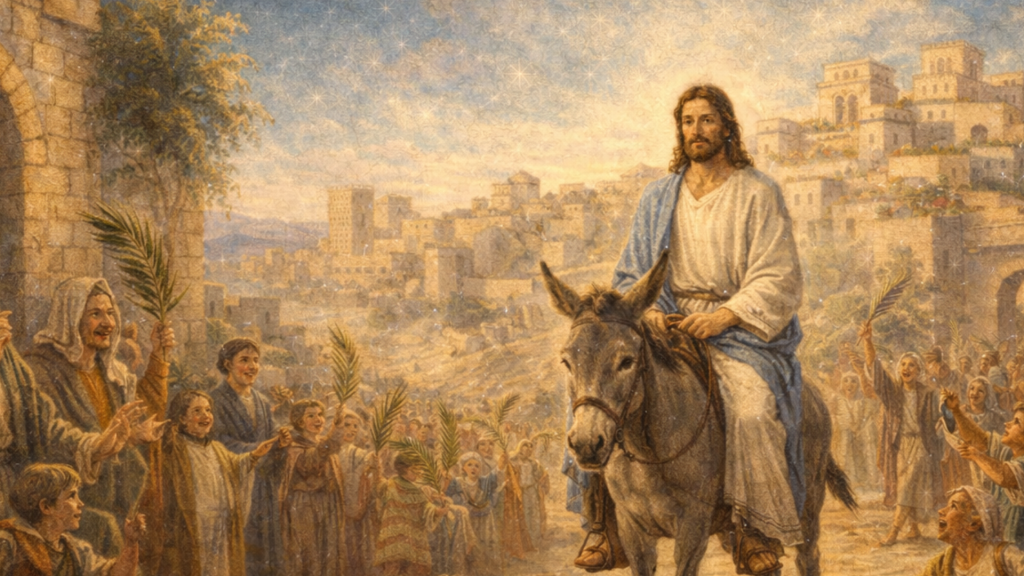
Centuries before Jesus rode into Jerusalem, Zechariah 9:9 foretold the manner of His triumphal entry:
“Rejoice greatly, Daughter Zion! Shout, Daughter Jerusalem! See, your king comes to you, righteous and victorious, lowly and riding on a donkey, on a colt, the foal of a donkey.”
This prophecy finds literal fulfillment in Matthew 21:4-5:
“This took place to fulfill what was spoken through the prophet: ‘Say to Daughter Zion, “See, your king comes to you, gentle and riding on a donkey”’.”
The humility of the Messiah contrasts sharply with worldly expectations of a conquering king, emphasizing a kingdom not of power, but of righteousness.
5. The Messiah Would Be Betrayed and Sold
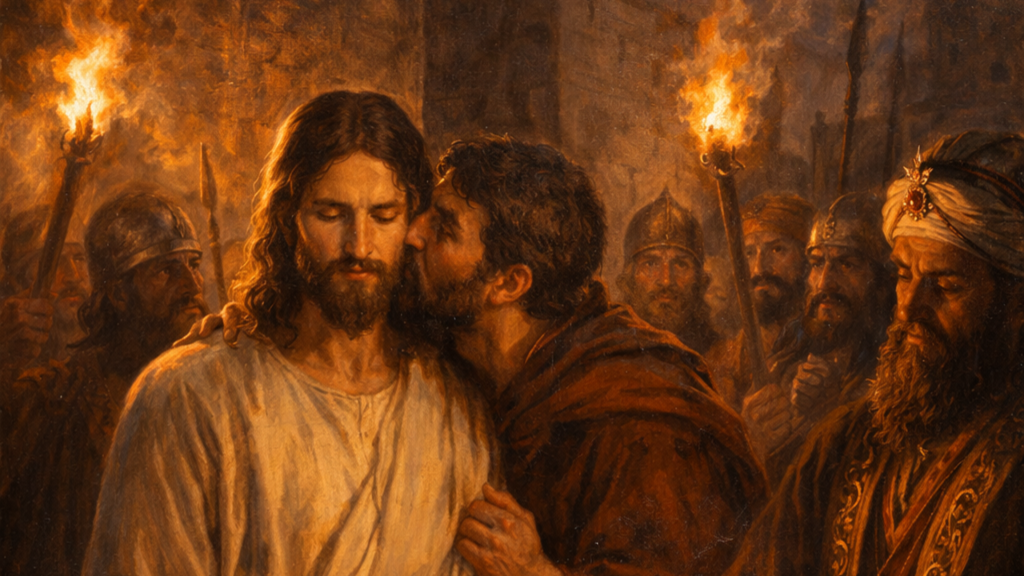
Psalm 41:9 predicts the betrayal of the Messiah by a close companion:
“Even my close friend, someone I trusted, one who shared my bread, has turned against me.”
This prophecy is realized in Judas’ betrayal of Jesus for thirty pieces of silver (Matthew 26:14-16; 27:3-10). Furthermore, Zechariah 11:12-13 even predicts the exact sum for which He would be betrayed, illustrating the extraordinary precision of Messianic prophecy.
6. The Messiah Would Be Resurrected
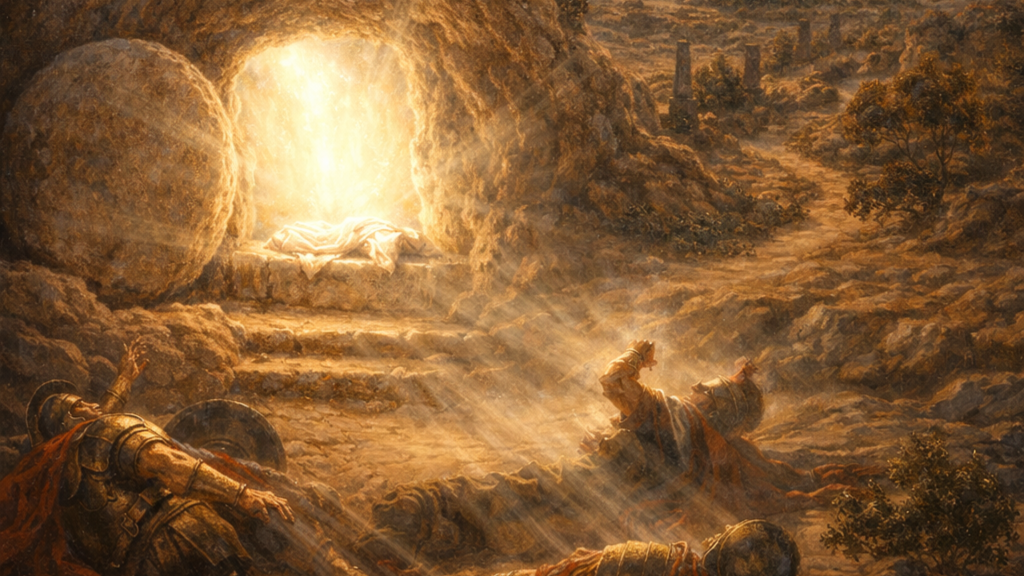
The resurrection of Jesus is the cornerstone of Christian faith. Psalm 16:10 declares:
“Because you will not abandon me to the realm of the dead, nor will you let your faithful one see decay.”
Peter interprets this prophecy in Acts 2:31:
“Seeing what was to come, he spoke of the resurrection of the Messiah, that he was not abandoned to the realm of the dead, nor did his body see decay.”
Jesus’ resurrection validates His identity as the Messiah and confirms the truth of all the Scriptures concerning salvation.
Conclusion
The fulfillment of Old Testament prophecies in the life, death, and resurrection of Jesus Christ is both astonishing and foundational to the Christian faith. From His virgin birth in Bethlehem to His suffering, betrayal, and triumph over death, Jesus embodies the promises foretold by the prophets. For believers, these fulfilled prophecies are not merely historical curiosities; they are divine confirmations that God’s plan of redemption, conceived before time, has been perfectly realized in Christ.
The coherence between prophecy and fulfillment strengthens our faith, encourages a deeper study of Scripture, and draws us into awe of God’s sovereign design. As Paul reminds us:
“For all the promises of God find their Yes in him” (2 Corinthians 1:20).