A Christ-Centered and Theological Reading of Cain and Abel (Genesis 4)
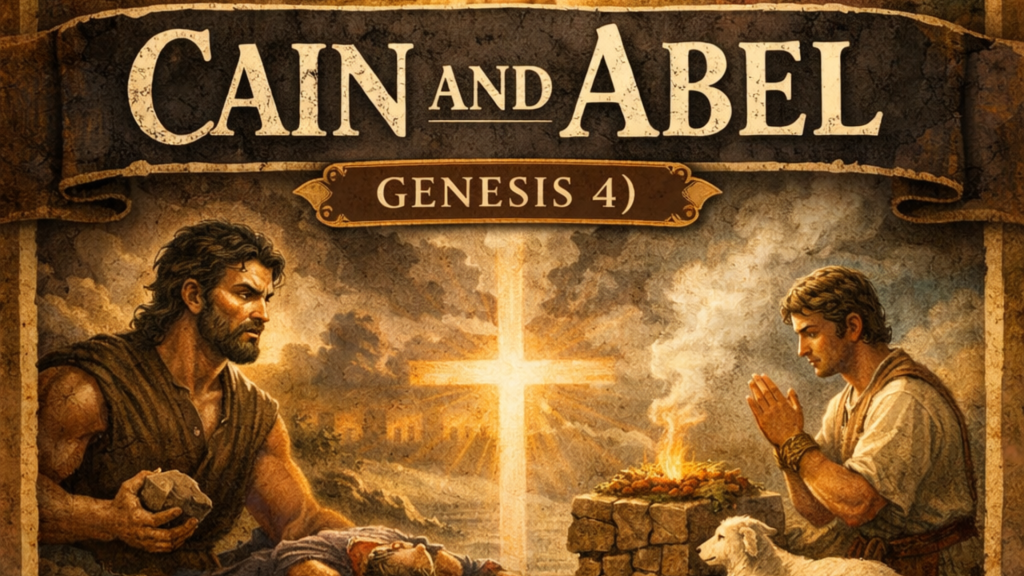
The account of Cain and Abel stands at the dawn of human history, immediately following the Fall. It is not merely the story of the first homicide, but the first theological confrontation between fallen humanity and a holy God. In this narrative, Scripture introduces themes that will dominate the entire redemptive story: worship, sacrifice, faith, sin, judgment, grace, and substitution. When read through the lens of Christ, Genesis 4 is not pre-Gospel—it is proto-Gospel.
Worship After the Fall: Humanity Still Comes to God
One of the most overlooked theological insights in Genesis 4 is that fallen humans still approach God in worship. Cain and Abel do not flee from God as Adam did; they bring offerings. This indicates that God has not withdrawn His presence or cut off relational access completely. The Fall did not erase the need for worship—it corrupted it.
This establishes a crucial biblical principle: all humans are worshipers, but not all worship is acceptable. The problem is not whether humans worship, but how and on what terms.
Faith vs. Autonomy: Two Theological Postures
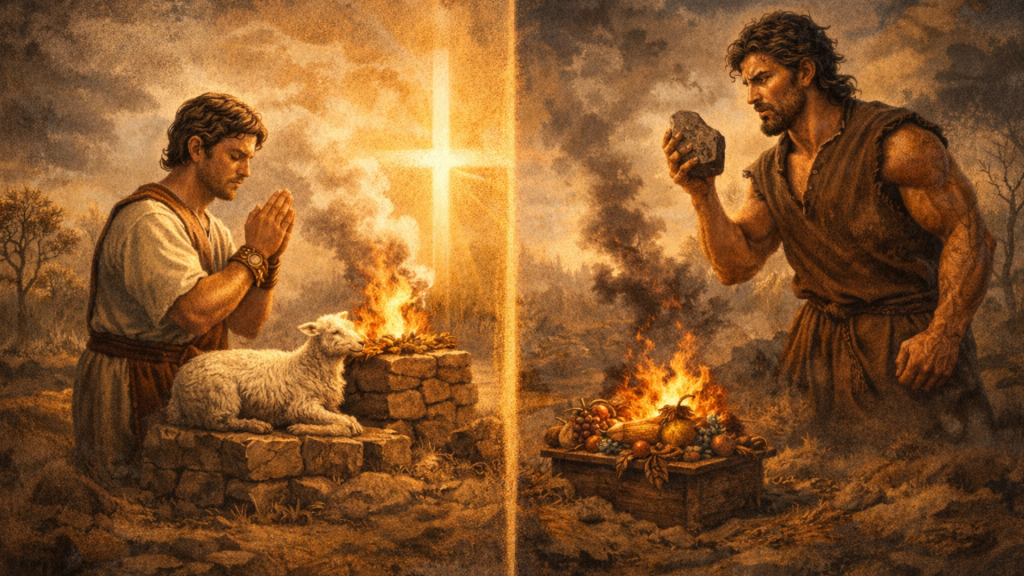
Abel’s offering is accepted because it is offered “by faith” (Heb. 11:4). Faith here is not merely belief in God’s existence, but trustful dependence on God’s revealed will. Abel submits himself to God’s terms of approach.
Cain’s offering, by contrast, reflects autonomy. He brings fruit of the ground—work produced by human effort from a cursed creation (Gen. 3:17). Cain’s theology is subtle but deadly: God should accept me because of what I produce.
This tension becomes foundational in Scripture:
- Abel represents justification by faith
- Cain represents self-justification by works
Paul later exposes this same error in Romans and Galatians. Cain is not an atheist; he is religious. His problem is not disbelief, but unbelief expressed through pride.
Sacrifice, Blood, and Substitution
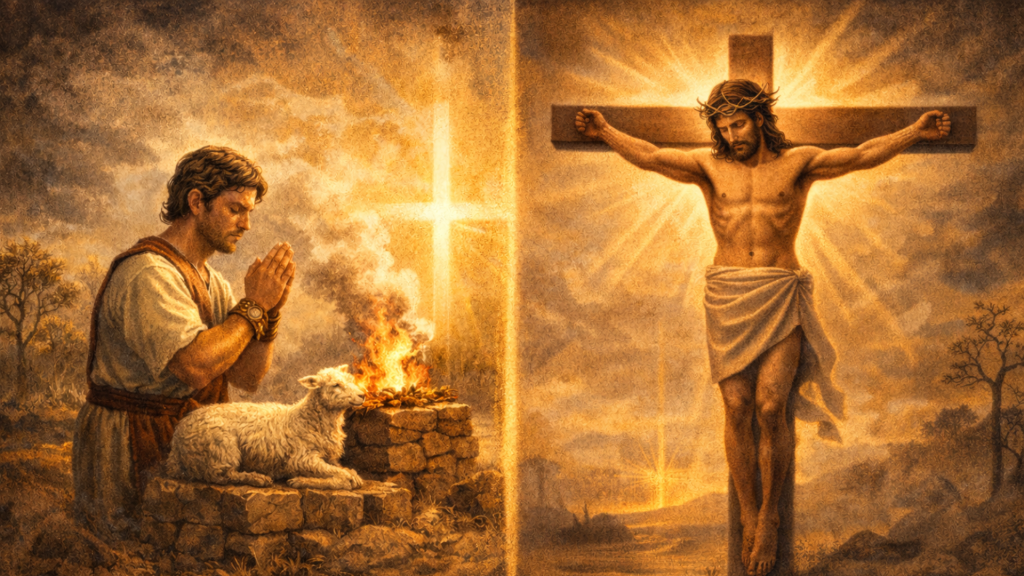
Abel’s sacrifice involves blood, signaling substitutionary logic. Though the text does not explicitly state God commanded a blood sacrifice, Genesis 3 already established a pattern when God clothed Adam and Eve with animal skins. Life is given so that sinners may live.
This introduces the theological principle of penal substitution:
- Sin deserves death
- Another life may stand in place of the sinner
Abel’s sacrifice does not remove sin, but it preaches the theology of redemption. It is a shadow anticipating the cross. Christ fulfills what Abel’s sacrifice symbolized: a life given willingly, accepted by God, sufficient and final.
Sin as a Power: “Sin Is Crouching at the Door”
God warns Cain:
“Sin is crouching at the door. Its desire is contrary to you, but you must rule over it” (Gen. 4:7).
Here Scripture introduces sin not merely as an action, but as a dominating power. Sin is predatory, invasive, and relationally destructive. Cain is morally responsible, yet the language anticipates Paul’s teaching in Romans 7, where sin is portrayed as an enslaving force.
This reveals a profound theological truth: humanity’s problem is not ignorance but bondage. Cain knows what is right. He is warned by God. Yet without grace, knowledge alone cannot conquer sin.
The Murder of the Righteous: Typology of Christ
Abel is killed because he is righteous (1 John 3:12). This is the first example of what will become a recurring biblical pattern: the righteous suffer at the hands of the wicked.
This establishes Abel as a type of Christ:
- Both are righteous
- Both are hated without cause
- Both are killed by their “brothers”
- Both deaths speak beyond the grave
Jesus fulfills this pattern perfectly. Where Abel’s death exposes the depth of human sin, Christ’s death absorbs it.
Blood That Speaks: Justice vs. Mercy
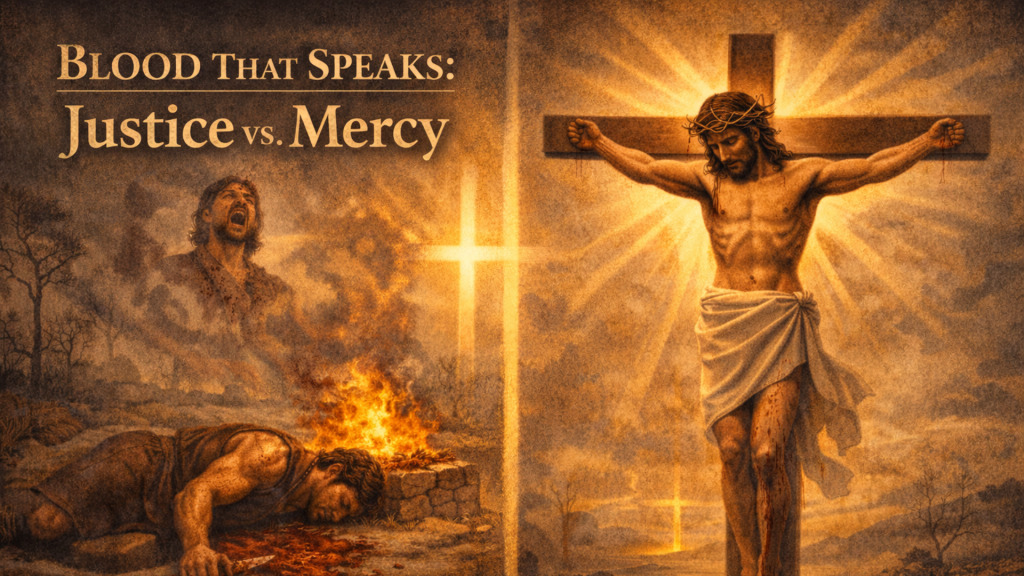
Abel’s blood cries out from the ground for justice. It demands divine response. This introduces the concept of moral accountability before God—sin is not private, and injustice does not disappear.
Yet Hebrews contrasts Abel’s blood with Christ’s:
“The blood of Jesus… speaks a better word than the blood of Abel” (Heb. 12:24).
Abel’s blood cries, “Justice!”
Christ’s blood cries, “Mercy!”
This is the heart of the New Covenant. Justice is not ignored; it is satisfied. Christ’s blood does not silence Abel’s cry—it answers it.
Judgment Tempered by Grace: The Mark of Cain
Cain deserves death. Instead, God exiles him and places a protective mark upon him. This moment reveals the tension between divine justice and divine patience. God does not excuse sin, but He delays final judgment.
Theologically, this anticipates common grace—God’s restraint of evil in a fallen world so that redemption may unfold. Cain lives, not because he is righteous, but because God is merciful.
This mercy points forward to the cross, where judgment is delayed no longer, but transferred.
The Way of Cain vs. the Way of Christ
Scripture later speaks of “the way of Cain” (Jude 1:11). It is the path of pride, self-made righteousness, resentment of grace, and violence toward those accepted by God.
Christ offers a different way:
- Humility instead of pride
- Faith instead of works
- Sacrifice instead of self-preservation
- Love instead of envy
Where Cain refuses responsibility for his brother, Christ becomes the ultimate Brother who gives His life.
Conclusion: The Gospel Begins Earlier Than We Think
Genesis 4 teaches us that the Gospel is not an afterthought—it is woven into the fabric of Scripture from the beginning. The story of Cain and Abel reveals that:
- Faith has always been the means of acceptance
- Blood has always been the cost of sin
- The righteous have always suffered
- Grace has always restrained judgment
- Christ has always been the destination of the story
Even at the dawn of human violence, God is already preparing the world for redemption. Abel’s life, death, and blood point beyond themselves—to a Savior whose blood would not cry from the ground, but flow from a cross, reconciling sinners to God.