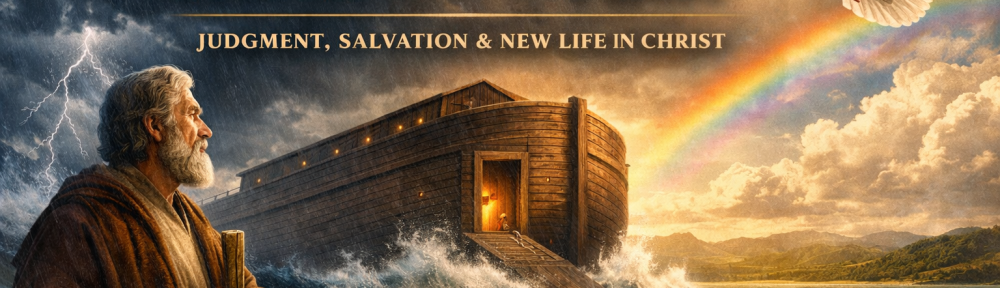
Salvation, Judgment, and New Creation in Genesis
Introduction: Seeing Christ in the Flood
The story of Noah and the ark is not merely a moral lesson about obedience or a historical account of a great flood. It is a Gospel-shaped narrative, intentionally designed by God to reveal His redemptive purposes long before Jesus Christ entered history in the flesh. From judgment to grace, from wrath to refuge, from death to new creation, the account of Noah preaches Christ in shadow and promise.
Jesus Himself affirmed that the days of Noah were spiritually significant and prophetically instructive (Matthew 24:37). When rightly understood, Noah’s story prepares our hearts to grasp the Gospel of the Lord Jesus Christ—our only refuge from judgment and our doorway into new life.
1. A Corrupt World: Humanity’s Universal Problem
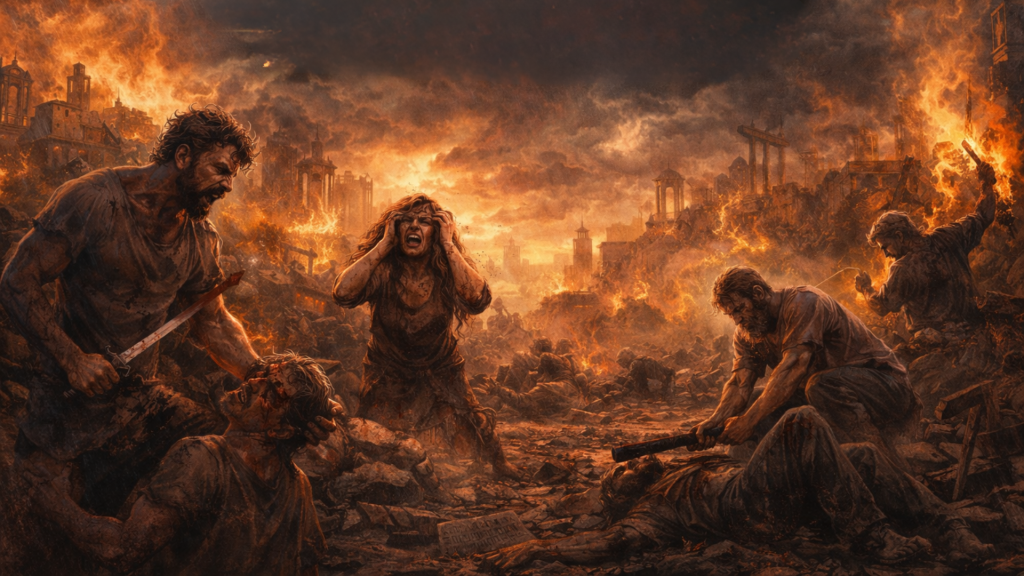
Genesis 6 presents a sobering diagnosis of the human condition. The earth was corrupt, violent, and filled with evil intentions “continually” (Genesis 6:5). This was not a momentary moral failure but a settled rebellion against God.
This chapter of Noah’s story establishes a foundational Gospel truth: sin is total, pervasive, and offensive to a holy God. Humanity’s problem is not merely external behavior but internal corruption of the heart. The flood reveals that God takes sin seriously, and divine judgment is not unjust—it is deserved.
The Gospel begins here. Before grace can be cherished, sin must be acknowledged. As Paul later declares, “The wrath of God is revealed from heaven against all ungodliness” (Romans 1:18). Noah’s generation and our own share the same need: rescue from the judgment our sin brings.
2. Noah Found Grace: Salvation Begins With God
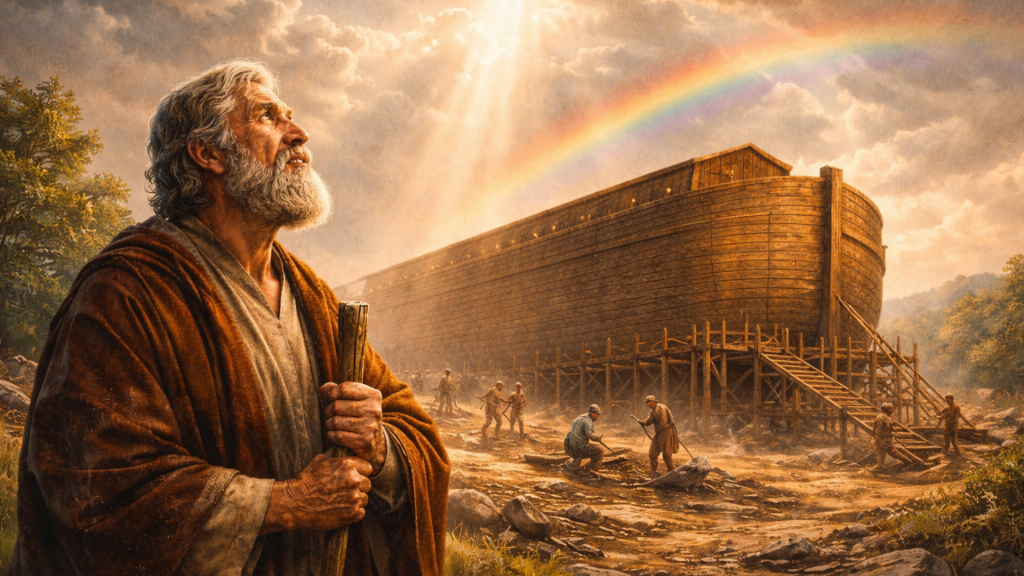
In the midst of universal corruption comes one of the most hope-filled statements in Scripture:
“But Noah found favor in the eyes of the Lord” (Genesis 6:8).
This favor—grace—was not earned. God’s grace preceded Noah’s obedience. Noah walked with God because grace had already found him. This mirrors the Gospel pattern revealed fully in Christ: God initiates salvation before humans respond.
Noah’s righteousness was the fruit of faith, not its cause. Hebrews 11:7 clarifies that Noah obeyed by faith, trusting God’s word about things not yet seen. In the same way, believers today are justified by faith alone, not by works (Romans 5:1).
Noah’s life teaches us that salvation has always been grounded in grace, never in human merit.
3. The Ark: God’s Exclusive Provision for Salvation
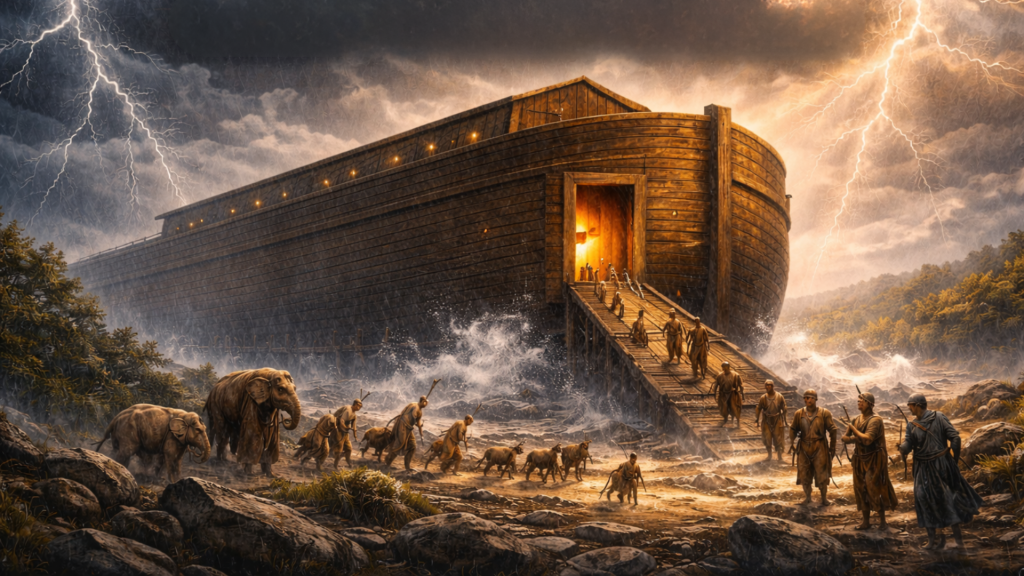
God did not merely warn Noah—He provided a way of escape. The ark was God’s idea, God’s design, and God’s provision. Every measurement, material, and feature pointed to divine intention.
There was one ark, just as there is one Savior. No alternative vessels were offered. Safety was not found in climbing mountains, moral reform, or human ingenuity—only in entering the ark.
This unmistakably points to Jesus Christ. Just as the ark sheltered Noah from the waters of judgment, Christ shelters sinners from the wrath of God. To be saved was not to admire the ark, study the ark, or agree with the ark—it was to enter the ark.
Likewise, salvation today is not found in religious knowledge or moral effort but in union with Christ Himself.
4. The Door of Mercy: Invitation and Urgency
The ark had a door—and God kept it open for a time. Noah’s obedience in building the ark was itself a public testimony, a visible sermon calling people to repentance. Scripture calls Noah a “preacher of righteousness” (2 Peter 2:5), implying that warning and invitation went hand in hand.
Yet the door did not remain open forever. When the time of patience ended, God Himself shut the door (Genesis 7:16). Judgment followed.
This reveals a critical Gospel truth: God is patient, but His patience has an appointed end. Today, the Gospel door stands open. Christ invites all who are weary and burdened to come to Him. But Scripture also warns that the day of grace will give way to the day of judgment.
The story urges readers not to delay repentance. Faith is not merely believing that judgment is coming—it is responding while the door is open.
5. The Floodwaters: Judgment and Salvation Through Death
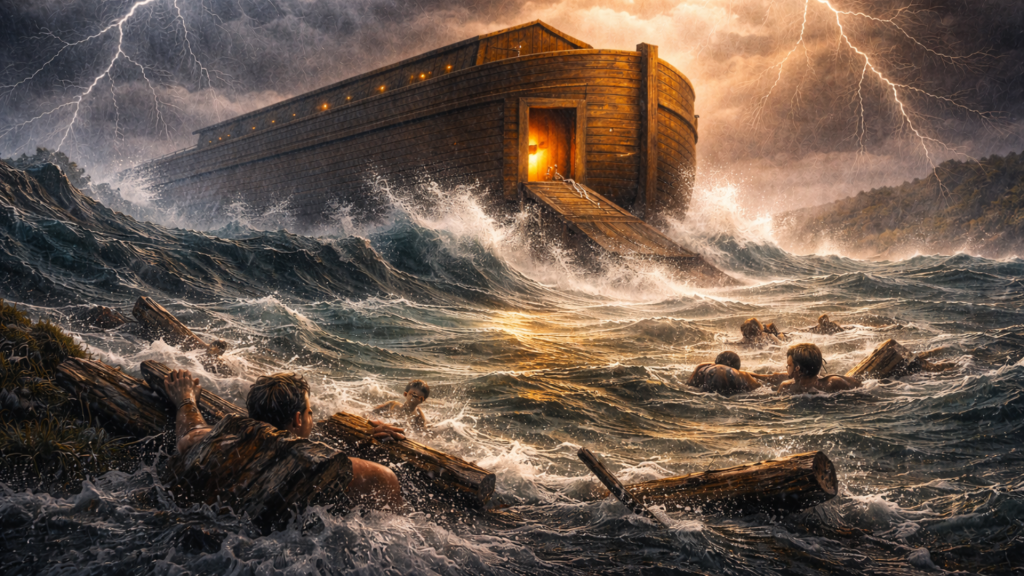
The floodwaters destroyed the old world, yet the same waters carried the ark safely above judgment. This dual function reveals the paradox at the heart of the Gospel: the judgment that should have destroyed us became the means of our salvation.
At the cross, God’s wrath against sin was poured out fully—not on sinners, but on His Son. Christ endured the flood of judgment so that those united to Him might rise in safety.
Peter makes this connection explicit, explaining that the flood prefigures salvation through Christ’s death and resurrection (1 Peter 3:20–21). The waters marked an end to the old life and the beginning of a new one—just as the Gospel brings death to the old self and resurrection to new life.
6. A New World: Resurrection and Renewal
When the waters receded, Noah emerged into a renewed creation. The world was cleansed, reordered, and given a fresh beginning. This points forward to the resurrection life believers receive in Christ.
The dove, the olive leaf, and the dry ground all speak of peace, rest, and restoration. These images anticipate the promise that Christ offers rest for weary souls and renewal for broken lives.
More than that, Noah’s new world foreshadows the ultimate hope of the Gospel—the new heavens and new earth where righteousness dwells. Salvation is not merely escape from judgment; it is entrance into God’s restored creation.
7. The Covenant and the Rainbow: Grace Secured by God
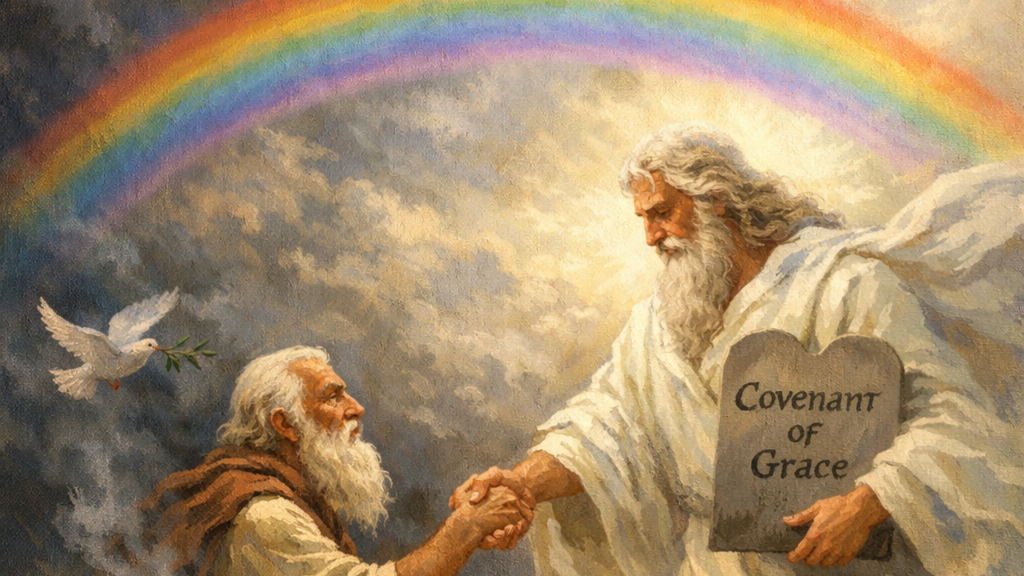
After the flood, God established a covenant with Noah and all creation. The rainbow was not a sign of human promise but of God’s commitment to mercy. It pointed upward, reminding humanity that God Himself would remember His covenant.
This prepares the way for the new covenant established in Jesus Christ. Through His blood, God secures salvation permanently for all who believe. Our hope rests not in our ability to remain faithful, but in Christ’s finished work.
Just as Noah stepped into a world upheld by God’s promise, believers stand secure in the unbreakable covenant of grace.
Conclusion: Christ, Our True Ark
The story of Noah is ultimately about Jesus Christ. He is the true Ark prepared by God, the only refuge from judgment, the bearer of wrath, and the giver of new life. Outside of Him there is no safety; in Him there is complete security.
As the rain fell and the door closed, only one question mattered: Were you in the ark?
That same question confronts every reader today.
Enter the Ark Today
The Gospel invitation is clear and urgent. Judgment is real—but so is grace. Christ stands as the open door, calling sinners to repentance and faith.
If you have never trusted in Jesus Christ, today is the day to respond. Turn from sin. Believe that Christ bore God’s judgment for you. Place your faith not in your goodness, but in His grace.
“Whoever comes to Me I will never cast out” (John 6:37).
Do not remain outside, delaying while the door stands open. Enter the Ark. Enter Christ. Find salvation, rest, and new life today.